

Trying to roll out a big initiative in a fast-paced organization? You send a multi-point email, follow up with a slide deck, then spend hours in a half-empty training session, only to discover weeks later that nobody remembers what you shared.
If this sounds familiar, you���re relying on outdated methods that easily get ignored during the chaos of the day. In a world where ���everything changes overnight,��� it���s no longer enough to announce and hope. What works is just-in-time change enablement: delivering guidance right inside the tools your teams use every day, when they actually need it.
Below, we���ll explain why the classic ���announce, train, hope��� playbook fails, then show you how to embed learning into the flow of work. You���ll see real-world examples, tactical tips you can apply now, and why repetition, reinforcement, and friction reduction drive real behavior change.
Why traditional Change Management falls short
When you rely on mass emails, lengthy slide decks, and quarterly workshops, you run into four big problems:
1. Information Overload. People already juggle dozens of tools, Slack threads, and deadlines. Add another multi-page PDF or 45-slide deck, and your messages drown in the noise. Even if someone opens your email, they���ll likely skim and move on without fully absorbing the details.
2. Lack of Context. Traditional training explains ���what��� and ���why,��� but rarely ���how��� in the actual tool where the work happens. Without context (what button to click, which field to update) users forget or make mistakes once they return to their usual workflows.
3. One-and-Done Reinforcement. After a single workshop, people return to day-to-day tasks and never revisit the materials. Without repeated nudges, adoption falls off. Mistakes resurface and frustration mounts.
4. Activity Over Outcome. Tracking attendance or downloads doesn���t tell you whether people are following the new process. Did your sales reps actually use the updated qualification criteria on their next call? Those ���boxes checked��� metrics leave you blind to real performance.
When content decays faster than people adopt it, you end up scrambling to audit and rewrite constantly. That cycle isn���t change management, it���s managing content churn.
Change Enablement: A smarter way forward
Change enablement shifts the focus from ���announce and wait��� to ���embed and reinforce.��� The core idea: people learn best by doing, so training must happen in the flow of work, and context matters more than content alone.
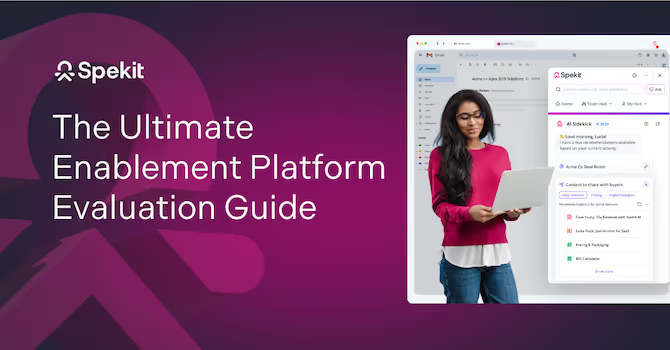
Instead of sending a separate email or hosting a one-time workshop, change enablement delivers bite-sized, contextual guidance right where users need it, inside tools like Salesforce, LinkedIn, Zendesk, or anywhere they work. For example, when a rep clicks to create a new opportunity, they see a quick tip that explains exactly which fields to fill and why those steps matter. When a support agent closes a ticket, a pop-up reminds them of the updated escalation process.
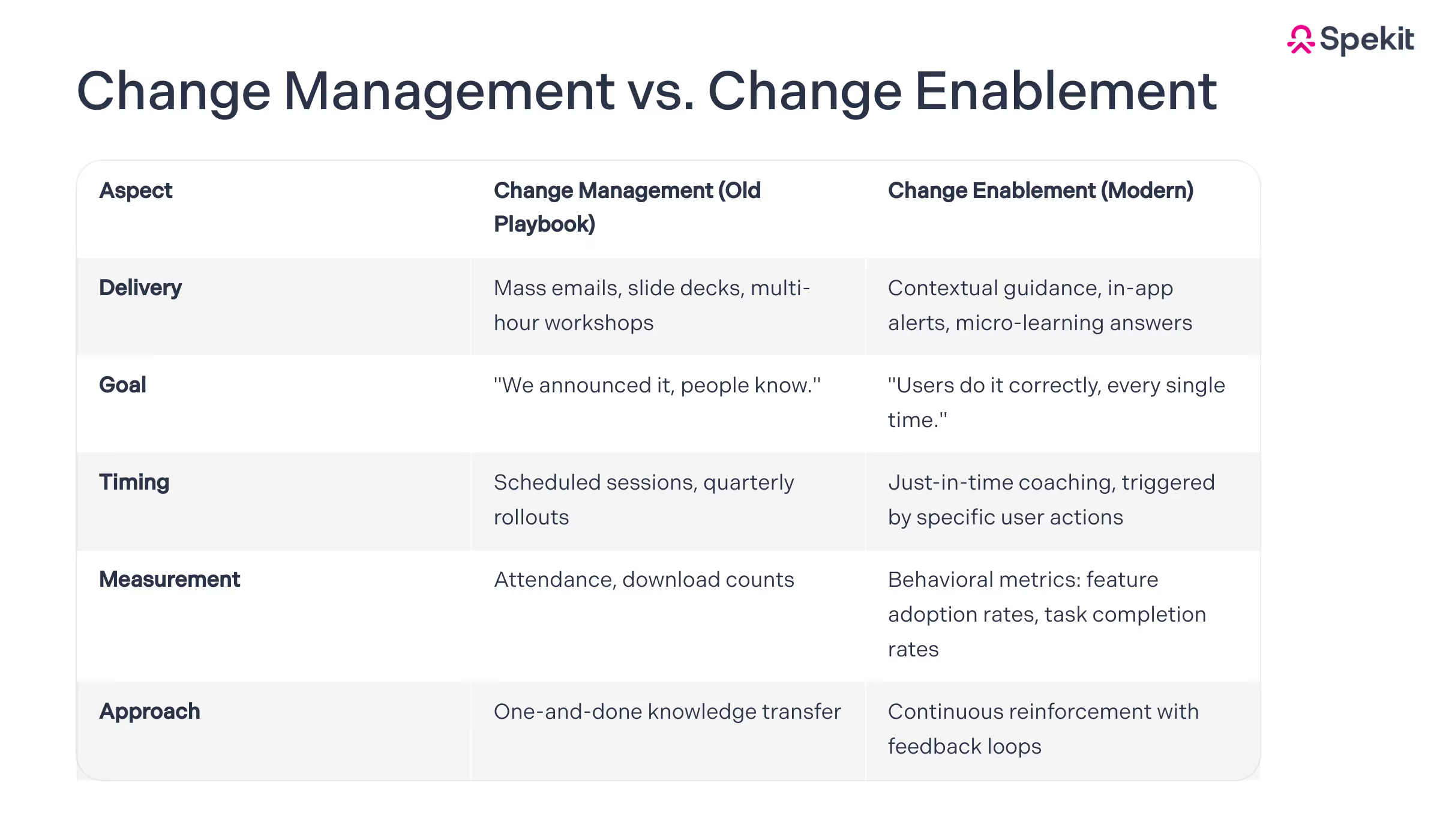
Below is a side-by-side comparison of old-school change management and modern change enablement:
Embedding training in the flow of work
Let���s compare two scenarios, one using change management, the other change enablement, to illustrate the difference.
Scenario A: New CRM rollout with change management
- Pre-Launch Email Blast. A 10-point email explains why the new CRM is critical, followed by a link to a 45-slide deck.
- All-Hands Workshop. Next week, everyone attends a two-hour ���Click-around��� session in a sandbox environment.
- PDFs on the Intranet. You post the slide deck and a detailed user manual on the intranet, hoping people will download and read later.
- Quarterly Refresher. Three months later, you schedule another session for updates���if people even remember to sign up.
Outcome:
��� Many never open the email.
��� Half the attendees zone out during the workshop.
��� Back in the live CRM, users forget which dropdown to choose.
��� Usage stats stay flat and frustrated teams email support instead of adopting.
Scenario B: New CRM rollout with change enablement
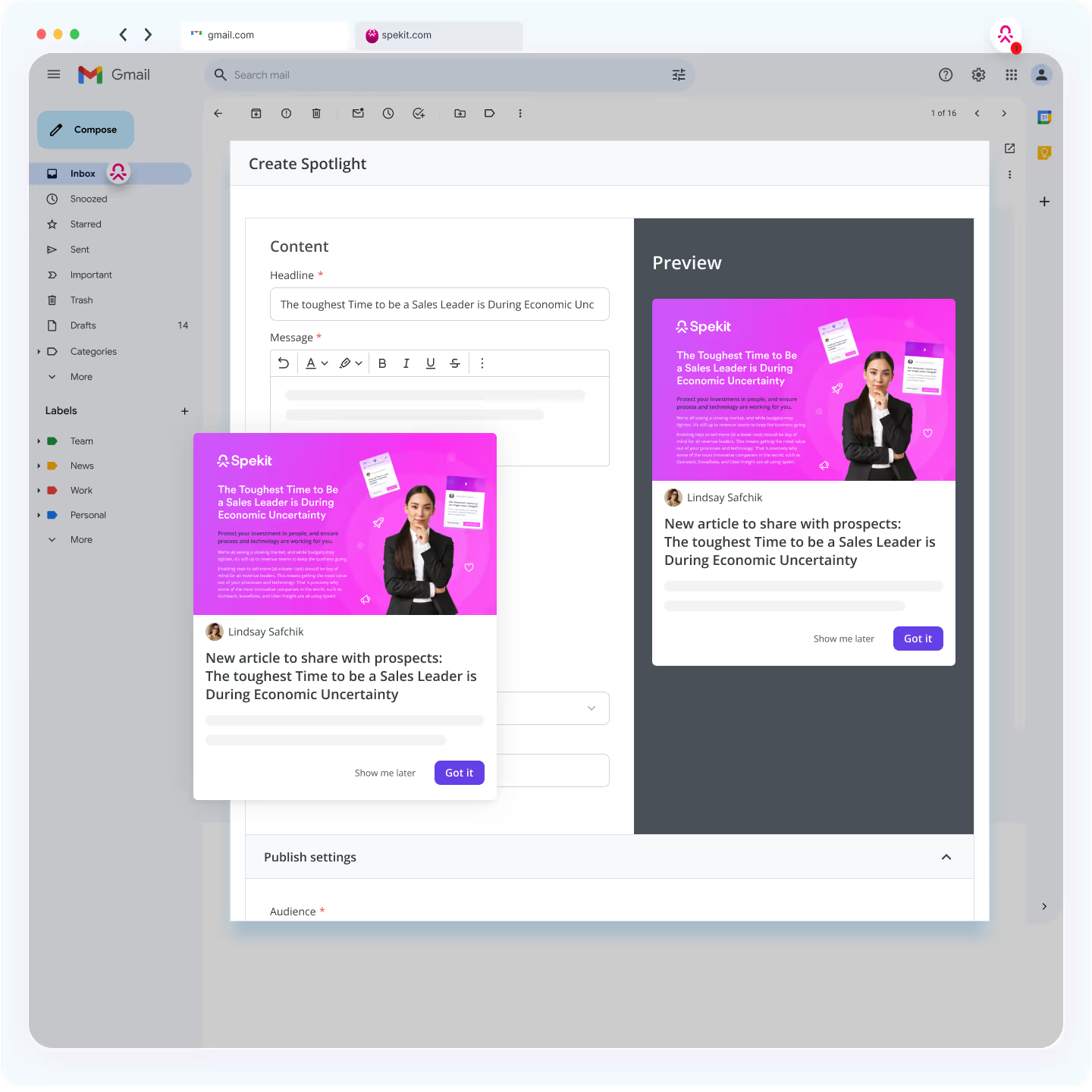
- Just-In-Time Alerts. On Day One, when a user logs into the CRM, a small pop-up explains ���Here���s where to create a new opportunity, click the ���+��� icon.���
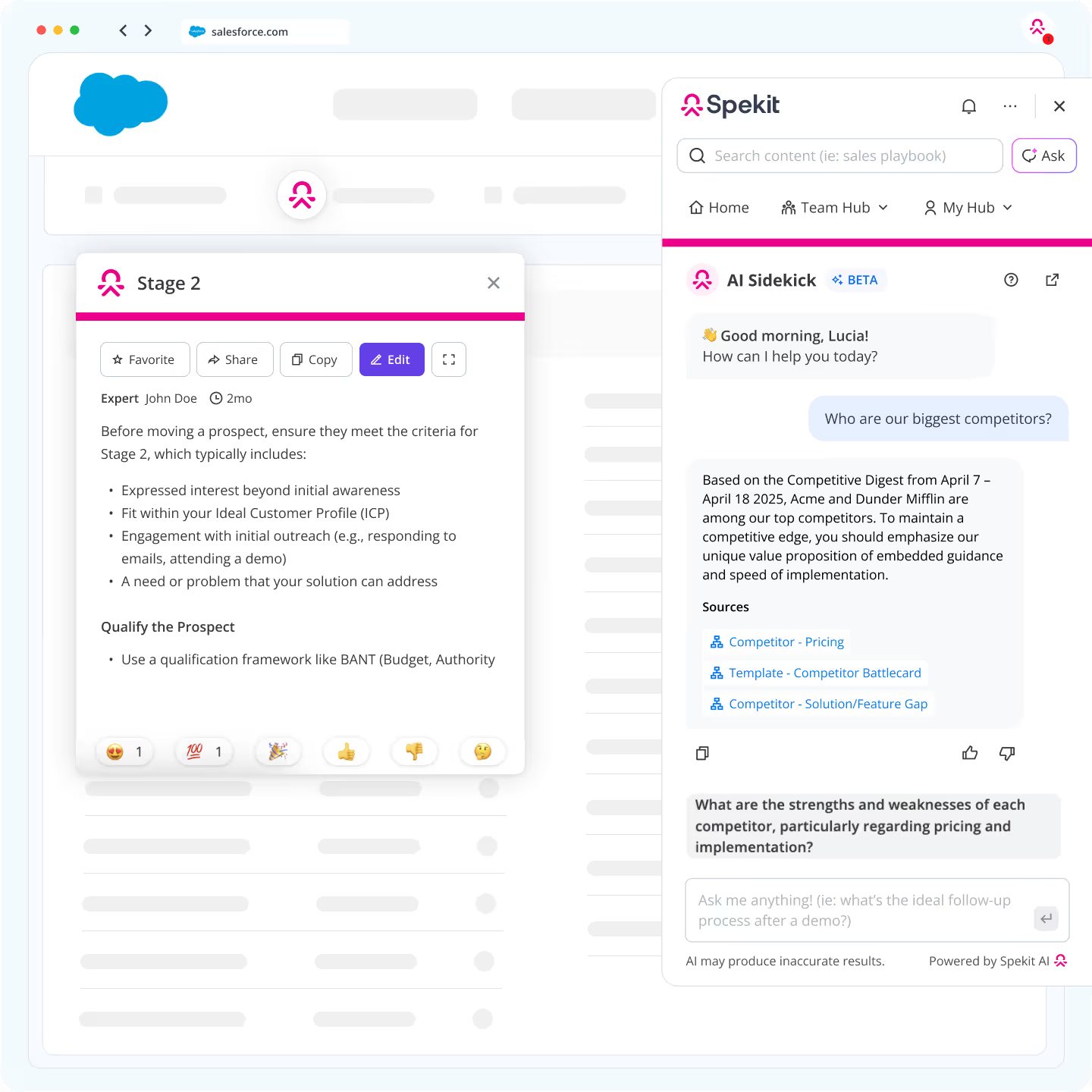
- AI Answers. As reps move between opportunity stages, they can ask any question to their AI Sidekick to instantly get an answer reminding them how to complete the process.
- Reinforcement Nudges. After five logged opportunities, an in-app banner suggests, ���Notice your close rate is below average, here���s a tip from our top performers.���
- Embedded Feedback. If a tip is unclear, a ���thumbs down��� lets users flag it. 窪蹋勛圖厙 logs that feedback so your enablement team can update the guidance immediately.
Outcome:
��� Reps learn by doing, no extra sessions required.
��� Behavioral triggers ensure guidance appears at the precise moment of need.
��� Continuous reinforcement keeps skills sharp.
��� Real-time feedback flags outdated tips so your team can refresh them quickly.
Three pillars of successful adoption
Adoption isn���t about how much content you produce; it���s about how well you drive repetition, reinforce behavior, and remove friction. Here���s how:
1. Repetition: Microlearning vs. marathon sessions
- Break Down Complex Processes. Instead of one two-hour training on lead scoring, create a 30-second card that says, ���When a lead reaches 50 points, follow this checklist to qualify.���
- Multi-Touch Scheduling. Trigger the same tip at Day 1, Day 7, and Day 30 so users aren���t overwhelmed but still get the reinforcement they need.
2. Reinforcement: Tie guidance to outcomes
- Behavioral Metrics. Track if users are engaging with your content. If a rep isn't following a new process you've rolled out, trigger a Knowledge Check to test their understanding.
- Social Proof. Show anonymized peer data: ���Your team���s average close rate is 25% higher when they use the new qualification checklist.��� Real-time nudges help people see the direct impact of their actions.
3. Reducing Friction: Remove every unnecessary step
- One-Click Actions. Allow users to take the recommended action directly from the guidance card (e.g., ���Click here to apply the new deal stage���). No hunting through menus or copying and pasting.
- Seamless Integration. If a tip references a document or resource, surface it in the same window rather than redirecting to a separate site. Keeping users ���in the flow��� ensures they never lose focus.
Real-World Example: Transforming marketing at Q4
When Q4���s marketing team moved all launch assets, from messaging briefs to demo videos, into 窪蹋勛圖厙, they immediately saw the difference. As Chris Allen, VP of Marketing, put it:
No user goes into Asana to obtain information now��死睋炡埳玵� is our single source of truth.
Instead of digging through project-management boards, marketers and sales reps found exactly what they needed inside 窪蹋勛圖厙. But visibility alone didn���t solve everything. Chris layered in certification exams and pitch checks to drive consistent messaging:
To drive messaging home, we have a certification exam on the content we provide in 窪蹋勛圖厙, a verbal pitch check, and then use Gong for keyword tracking.
That approach turned every launch into a repeatable process. What used to require weeks of ad-hoc ride-alongs now happens in days, ensuring every rep tells the story exactly as marketing intends.
When AI Sidekick arrived, discoverability skyrocketed:
���The ability to search using AI is groundbreaking in our space. There���s so much legacy content that���s now instantly queryable with 窪蹋勛圖厙. It���s really the force multiplier for us as it relates to enablement,��� Chris explained.
With Revenue Insights tying every asset view to pipeline metrics, the team doubled down on content that converts and retired what doesn���t. 窪蹋勛圖厙���s engagement data became the fuel for new go-to-market moves, and human judgment guided priorities:
���While AI can provide outcomes very rapidly, you still have to be able to synthesize and decide what���s important and then drive action,��� Chris noted.
By combining AI-driven insights with human strategy, Q4���s marketing engine now runs with surgical precision, content that drives revenue, delivered at the exact moment of need.
How 窪蹋勛圖厙 powers change enablement
窪蹋勛圖厙 was built for this new playbook. Rather than collecting dust in a training portal, 窪蹋勛圖厙���s just-in-time enablement platform delivers:
- In-App Guidance
��� In-app alerts, microlearning, and one-click actions appear inside the apps your teams already use like Salesforce, Zendesk, Slack, and more. - AI-Powered Curation
��� 窪蹋勛圖厙 detects outdated content (for example, when picklist values change) and flags tips for quick review. No more manual audits every quarter. - Blended Knowledge and Communication
��� Send an in-app alert about a new process in the same workflow where you push an updated SOP into Salesforce. Speak to your teams without forcing them to switch tools. - Embedded Feedback Loops
��� A simple ���thumbs down��� on a tip sends feedback to your enablement team in real time. Clear, direct input helps you iterate quickly. - Continuous Reinforcement and Measurement
��� Track content views, interactions, and downstream behavior (Did the rep close that opportunity with the new workflow?). Dashboards highlight where content engagement stalls so you can fix it.
By removing barriers, embedding learning into daily work, and focusing on performance rather than documentation, 窪蹋勛圖厙 turns ���announce and forget��� into a continuous loop of improvement, adoption, and impact.
Actionable next steps
Whether or not you use 窪蹋勛圖厙, here are five tactical steps to shift from change management to change enablement this week:
- Identify Your First ���Moment of Need.��� Pick one critical workflow like logging a new opportunity or closing a ticket. Draft a 30-word content card that explains the exact step when a user is in that tool.
- Break One Email into Micro-Tips. Take an existing email or PDF you���re about to send, then break it into three to five bite-sized tips. Push those tips contextually (e.g., when a user opens a specific form), instead of expecting them to open an attachment.
- Add a ���Quick Feedback��� Button. Even a simple form field can let users say, ���This tip helped��� or ���This tip is unclear.��� Review feedback every week and update accordingly.
- Build a Reinforcement Cadence. Pick one new behavior (such as tagging leads as High Intent) and schedule at least three reminders: Day 1, Day 7, and Day 30. Use in-app alerts or Slack messages to nudge users until the habit sticks.
- Measure Behavioral Metrics. Shift your KPIs from ���number of workshops��� to ���percentage of users completing the updated workflow.��� If the adoption rate is low, investigate why. Are tips unclear? Too buried? Iterate until you see real behavior change.
Conclusion
The old ���announce, train, hope��� approach simply can���t keep pace with today���s rapid-change environment. If you want your teams to adopt new tools and processes, you must move from change management to change enablement, embedding learning into the actual work, reinforcing it continuously, and removing every barrier in the workflow.
Pick one process you���re about to roll out, identify its key moments of need, and deliver guidance where people work. When you do, you���ll stop managing change and start enabling it, empowering every employee to learn by doing and deliver better results, faster.