

Sales kickoff has always carried a certain promise.
For a few days, everyone is together. Language aligns. Priorities feel clear. Leaders speak with conviction about where the business is headed and why this year matters. Sellers leave believing the work ahead will look different from the work behind them.
Then Monday comes.
Calendars refill. Deals reappear mid-stream. Someone asks where the slides live. A manager postpones a coaching conversation because the quarter is already loud. By the end of the week, most teams are operating exactly as they were before kickoff, only with better memories and a new hoodie.
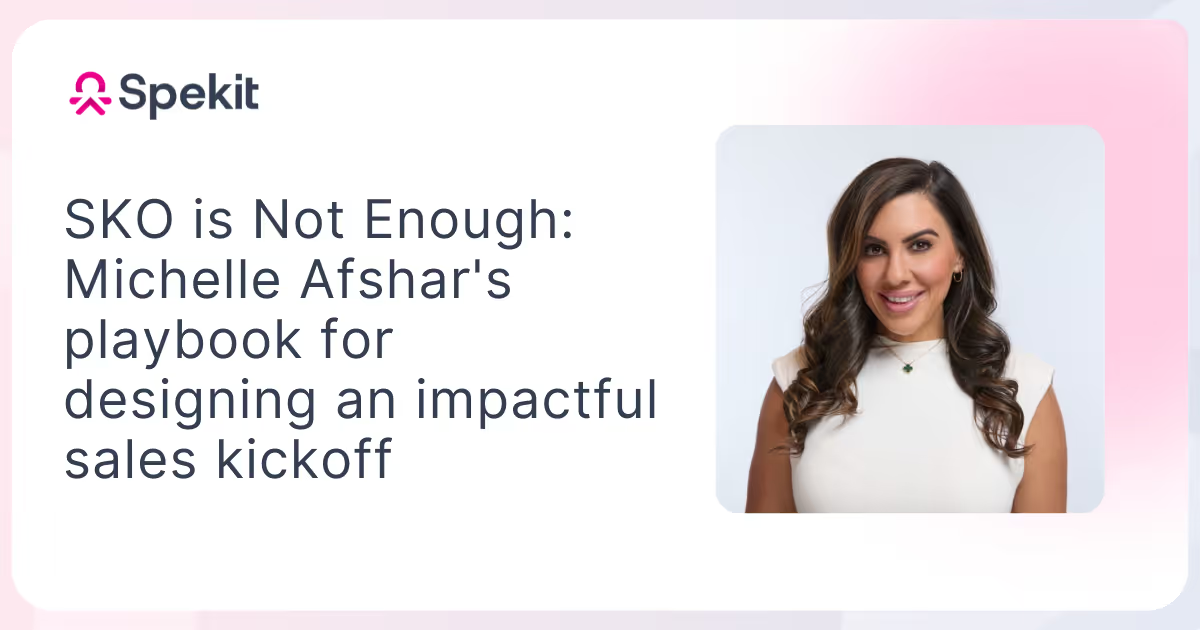
has watched this pattern repeat across companies, industries, and stages of growth. She鈥檚 been a seller in those chairs. She鈥檚 planned SKOs as an enablement leader. She鈥檚 stood on stage introducing new plays, new messaging, new expectations. Today, she鈥檚 the Global Head of Enablement at Darktrace, after leading enablement at Zoom, Palo Alto Networks, and other organizations where selling is complex and the margin for error is thin.
Over decades, she鈥檚 seen SKOs that were beautifully executed and quietly ineffective, and others that changed behavior long after the event ended.
Her conclusion is that kickoff rarely fails because teams don鈥檛 care but because it's treated as an event instead of a system. We sat down with Michelle for a webinar where she shares this system and more insights from her years of experience building impactful sales kickoffs.
Keep reading for the highlights or catch the full webinar here.
What changed, even if we didn鈥檛 notice
There was a time when sales kickoff could reasonably carry a year鈥檚 worth of direction.
Product launches were slower. Messaging evolved at a manageable pace. Sellers had room to absorb what they learned before the next change arrived. Kickoff functioned as a reset that held.
That world no longer exists.
Today, sellers operate inside continuous motion. Messaging updates stack. Product changes arrive mid-quarter. Competitive context shifts without warning. The distance between learning something new and needing to use it has collapsed. This is the new normal all revenue teams live in today.
Humans don鈥檛 change how they operate because they were inspired once. They change when the question they need answered or skill set they practiced in SKO comes up again later, in context, when it鈥檚 relevant and when the environment around them requires that change.
That insight reshapes how every sales kickoff should be designed.

Why the Monday after SKO is the real test
Enablement leaders often measure kickoff by how it feels in the room. Energy. Engagement. Alignment. Michelle measures it by what happens when the room empties.
What do sellers reach for when they鈥檙e back in live deals?
What language shows up in pipeline reviews?
What questions managers ask in one-on-ones three weeks later?
Those signals matter more than applause because they reveal whether kickoff changed behavior or simply created momentum without direction. Michelle plans for those moments deliberately. She assumes memory will fade. She assumes work will reclaim attention. She designs for that reality instead of fighting it.
That's the foundation of her playbook.
Download the 14 Week Post SKO Reinforcement Plan Here ->

The three forces that make reinforcement work
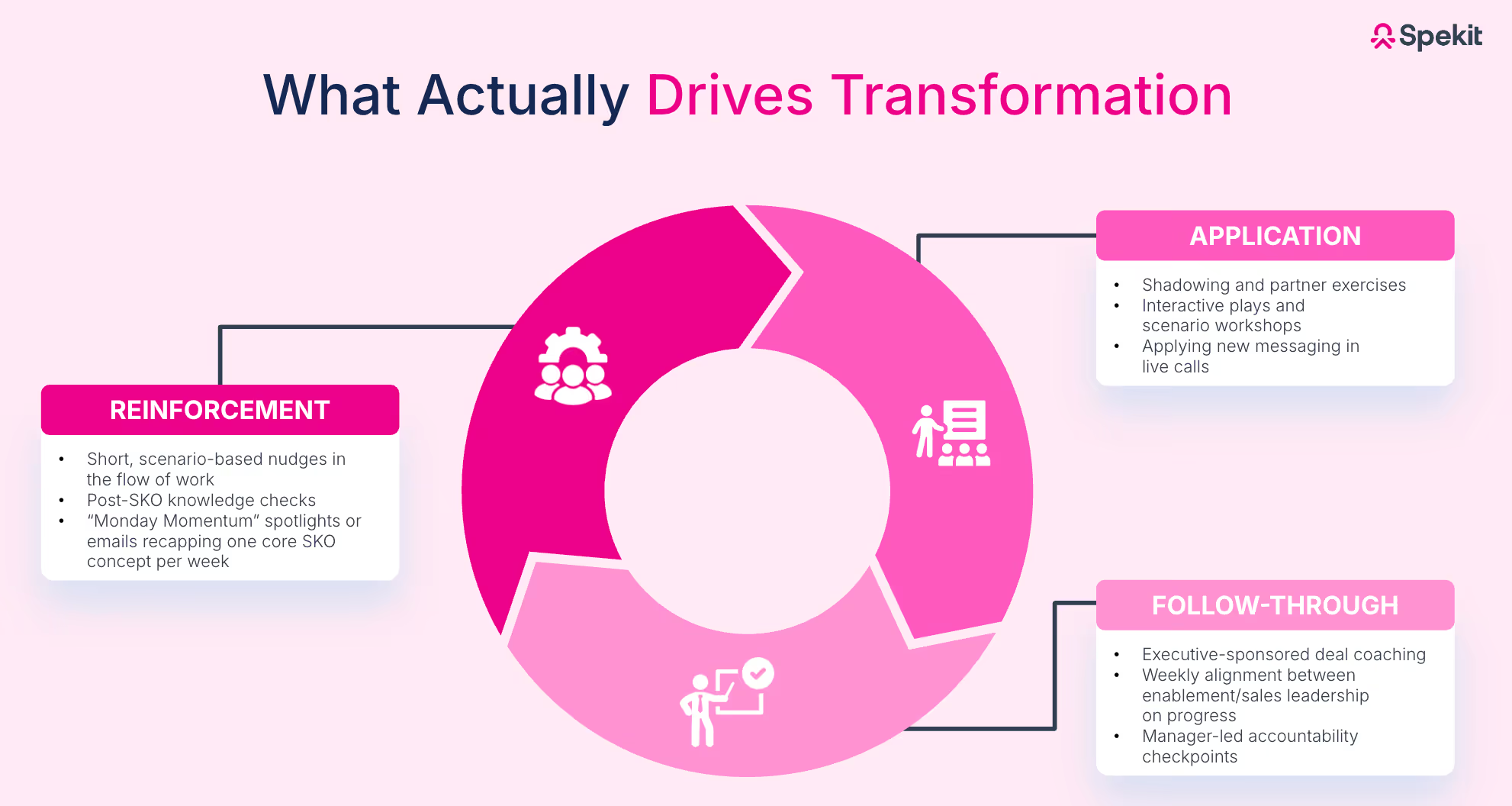
Over years of iteration, Michelle has found that post-kickoff behavior change consistently depends on three forces working together: reinforcement, application, and follow-through.
These are the conditions you need to design your entire SKO聽playbook around.
Reinforcement: helping ideas reappear when they matter
Reinforcement isn't sending a lengthy post-event recap. It鈥檚 helping the training, playbooks, and methodologies that you introduced re-enter a seller鈥檚 workflow at the moment they need it.
That might be a short story about a peer who applied a concept and saw progress. It might be a nudge that surfaces during deal prep. It might be a manager casually referencing a shared language during a coaching conversation.
The form varies but the intent stays consistent.
Reinforcement works when it respects how people actually operate under pressure. Sellers don鈥檛 go searching for learning. They respond to what shows up while they鈥檙e already working.
Michelle plans reinforcement as a series in different formats. Different senders. Different timing. Each touchpoint small enough to be absorbed, but intentional enough to be remembered.
The goal is familiarity versus compliance.
Application: creating space to practice after reality sets in
Kickoff often creates agreement before it creates confidence.
Sellers understand the direction. They still hesitate when it鈥檚 time to apply it. That hesitation is less resistance and more uncertainty.
Michelle builds application into the weeks following kickoff. She waits until sellers have had enough real exposure to know where they struggle. Then she brings them back together to work through those moments directly.
Practice, in this context, isn't role-playing but real deals, real objections, real constraints. It鈥檚 using the new language when the stakes feel familiar.
This timing matters. Too early and practice feels abstract. Too late and it feels optional. Application is where ideas stop being theoretical and start becoming usable.
Follow-through: where leadership quietly decides what sticks
Enablement can design the system but rarely can it enforce behavior change alone.
Michelle is clear that sustained change must come from the frontline leaders.
Managers control the weekly rhythm. They decide what gets revisited, what gets coached, what becomes habit. If a concept never appears in a one-on-one, it rarely survives.
Michelle removes ambiguity from this relationship by equipping managers directly with clear agendas, clear answers, clear expectations, and clear guidance on what will happen after kickoff.
This is about making reinforcement part of leadership because when managers have clarity, enablement gains leverage.
The 14 Week Post-SKO Reinforcement Plan
What all of this adds up to is a simple shift in how kickoff is treated.
For Michelle, kickoff marks the opening of a longer arc. The event sets direction but the work that follows determines whether that direction holds.
Over time, she stopped answering post-SKO questions with one-off answers and started answering them with a playbook. A rough map of what needs to happen after the room clears and the work resumes because teams need structure and guidance once the noise returns.
That map eventually became a 14-week post-SKO reinforcement plan.
Fourteen weeks reflects how long it often takes for new behaviors to feel familiar inside real work. Long enough for sellers to encounter friction. Long enough for managers to coach through it. Long enough for ideas to resurface when they actually matter.
The early weeks focus on orientation and reinforcement. Helping teams reconnect with what they heard while the context is still nearby. Making it easy to re-enter the material without hunting. Keeping the signal clear without asking for heavy lift.
The middle stretch creates room for application. By then, sellers have enough real experience to know where confidence dips. Practice feels grounded because it responds to lived situations, not anticipation.
Later weeks bring leadership more fully into the rhythm. Shared language shows up in coaching. Reinforcement becomes part of how work gets done, not something layered on top.
Not every team will run fourteen weeks. Some will start with six. Some will adapt it for a virtual kickoff or a mid-year reset. What matters is less about the length and more about the intention to design beyond the event.
Michelle was gracious enough to share an example of her plan so that enablement and revenue leaders can use it as a starting point. You can download it for free here.
Kickoff will always be an memorable experience and those deeper connection moments that teams remember but true success depends on what happens after. To learn more about how to maximize post-SKO reinforcement, chat with a member of our team.