

When Apple launches a new iPhone, people line up out the door.泭
They stand there, sometimes for hours, waiting to be one of the first to get their hands on a product that���s only marginally better than one in their pocket. Why? Because Apple has turned their launches into cultural events. They���ve mastered anticipation, urgency, and desire.
It���s easier to do with a consumer product that society has come to rely on day-in and day-out. But you���re just as capable of creating anticipation and excitement for your own product launches, if what you���re launching addresses real user pain points.泭
And if you take the time to use a product launch plan built to align your team, sharpen your messaging, and enable sales to move fast and win deals.
With this guide, you get a:泭
- Proven product launch framework broken down by phase
- Practical checklist to keep you on track
- Launch readiness assessment to catch issues before they derail your rollout
Prefer to get straight to work and read later?
Download our AI���Powered Product Launch Planning Template and make it your own.
Download the Template
What is a product launch plan?
A product launch plan is the structured playbook product marketers use to prevent a new product from becoming another forgotten release in a crowded market. It forces them to think through and align on:
- Goals that actually matter (rather than relying on vanity metrics)
- Roles so nobody's pointing fingers when things go sideways
- Messaging that resonates instead of corporate-speak that puts people to sleep
- Sales enablement that turns sales into product evangelists
- Communications that build anticipation and increase adoption
Despite the specificity of its name, a product launch plan can be modified to launch features as well as products and to help reposition products to a new market.泭
Its end goal is adoption of the new feature or product you���re releasing and the acquisition of new customers
What���s the difference between a product launch strategy and a product launch plan?
Strategy, planning, and execution. The first two often get muddled together but are equally essential for the third to go smoothly.泭
So, what���s the difference, really?泭
Strategy = high level vision that guides your decisions (what and why).
Plan = tactical execution roadmap that brings your strategy to life through specific tasks, deadlines, and deliverables (how and when).
If you've found yourself on this page and don't yet have a strategy in place, check out our guide to setting product launch strategies from scratch. If you do have your strategy sorted, let���s keep our focus on the how and when of your product launch.
What does a successful product launch look like?
Before we break down the phases of a product launch and give you our product launch checklist, let���s get clear on what the plan is preparing you for: success.
Success isn���t hitting your deadlines. It���s not even launching the product.
Those are part of it but real success is when:
- Every team involved is on the same page: Product knows what they built and why it matters. Sales can explain the value proposition in their sleep. Customer success understands how to talk customers through the changes.
- Sales becomes your biggest advocate: They have battle cards, demo scripts, objection handling guides, and competitive intel ready to go. Most importantly, they actually use them.
- Your messaging feels intentional everywhere: Whether someone reads your launch email, visits your website, or talks to a sales rep, they hear the same core story. There���s no mixed messages, no confusion about what problem you're solving, or who you're solving it for.
- Execution feels smooth: There might be last-minute tweaks, but there's no scrambling because everyone knows what they're responsible for and when.
- People actually engage with what you built. Your content gets used. Your messaging sticks. Early customers give feedback that helps you iterate and improve. It���s the stuff of product marketer���s dreams.
- You know if it worked: Whether it's adoption rates, pipeline generation, or customer satisfaction scores, you have data to prove your launch moved the needle.
If you���re nodding along and want a shortcut to execution, we built a planning template that maps out every step.

What are the phases of a product launch?
Before NASA launches a rocket into space, the astronauts, engineers, scientists, and launch staff work through a strategic sequence of events before they get countdown to liftoff.
If anything gets skipped, the entire mission is at risk of failing. At best, something expensive needs repairing. At worst, lives are lost. So they stick to their plan. Every. Single. Time.
Your product launch probably has less riding on it but the concept is the same. If you rush from idea to lift off without going through each phase of a product plan, you too risk failure.泭
To avoid that, break your product launch plan into these four phases:
Phase 1: Alignment (4���6 weeks out)
In this foundational phase, you���re aligning your team on the goals and needs of your mission. Those goals are as much about outcomes (like adoption or revenue impact) as they are about deadlines. And those needs will surface gaps in content, clarity, or coordination before launch day.
Start by defining what success looks like. Is the goal increased usage? Pipeline acceleration? Shifting perception in the market?泭
Next, bring your cross-functional team together. That���s usually product, sales, marketing, CS, maybe operations, and someone from leadership. But it depends on the size of your organization. This is your chance to clarify what���s launching, who it���s for, why it matters, and what each team is responsible for.
Do it right: We recommend creating a centralized document that everyone can refer back to.泭
It should capture:
- Key messages and positioning
- Target audiences and personas
- Required content and assets
- Internal and external timelines
- Team roles and communication plans
A lot of that information, like your target audience and positioning, will be sourced from your existing strategy. But the rest of it, such as the timeline, team roles, and detailed messaging will be created at this stage.
Phase 2: Enablement (2-4 weeks out)
This phase is about creating the materials Sales, Marketing, and CS need to go to market with confidence. You���ll build things like:
- Battle cards
- Talk tracks
- Demo scripts
- Objection handling guides
- Competitive comparisons
- FAQs
- Internal and external announcements
However, creating these sales enablement assets isn���t enough. Just think, how many 1-pagers have you created that do nothing but collect dust in some forgotten Drive folder?泭
To avoid that this time, your content needs to be accessible and visible, surfaced to Sales at the moment of need, right inside the tools they already use. That way, they���re not pinging you to ask where the doc is. More importantly, they���re not freestyling your carefully crafted messaging or misrepresenting features in the wild.
At the same time, your marketing team should be building the external-facing materials: landing pages, launch emails, blogs, videos, and social campaigns. Make sure these mirror the same messaging pillars you defined in Phase 1.
Do it right: Prioritize distribution as much as creation. The best enablement assets are the ones that get used, and used correctly.
There are tools to help. Modern product marketing tools like 窪蹋勛圖厙 are AI-powered sales enablement platforms that embed training and content directly into the tools your team already uses, like Salesforce, Microsoft Teams, and Slack. It even can turn messaging docs into battle cards and auto-create objection handling scripts.泭
We asked a Product Marketing Manager here at 窪蹋勛圖厙 what tactic they never skip in a launch.泭
Their answer: ���Creating a dedicated Playlist in 窪蹋勛圖厙. It���s the single source of truth for every launch. It walks the sales team through messaging and positioning, product details, timelines, personas, sales assets, and more.���
Want to see 窪蹋勛圖厙���s full feature set? Check them out here.

Don���t miss this resource:
The AI-powered product marketing playbook for the Just-in-Time Era is packed with insights to help your team stay ahead of the curve.
Read the PlaybookPhase 3: Launch & support (launch week)
Your job now is to ensure a smooth rollout, rally internal teams, and support adoption with clarity and consistency.
Start with internal comms. Make sure every stakeholder knows:
- What���s launching
- When it���s going live
- What���s expected of them
- Where to find the latest assets
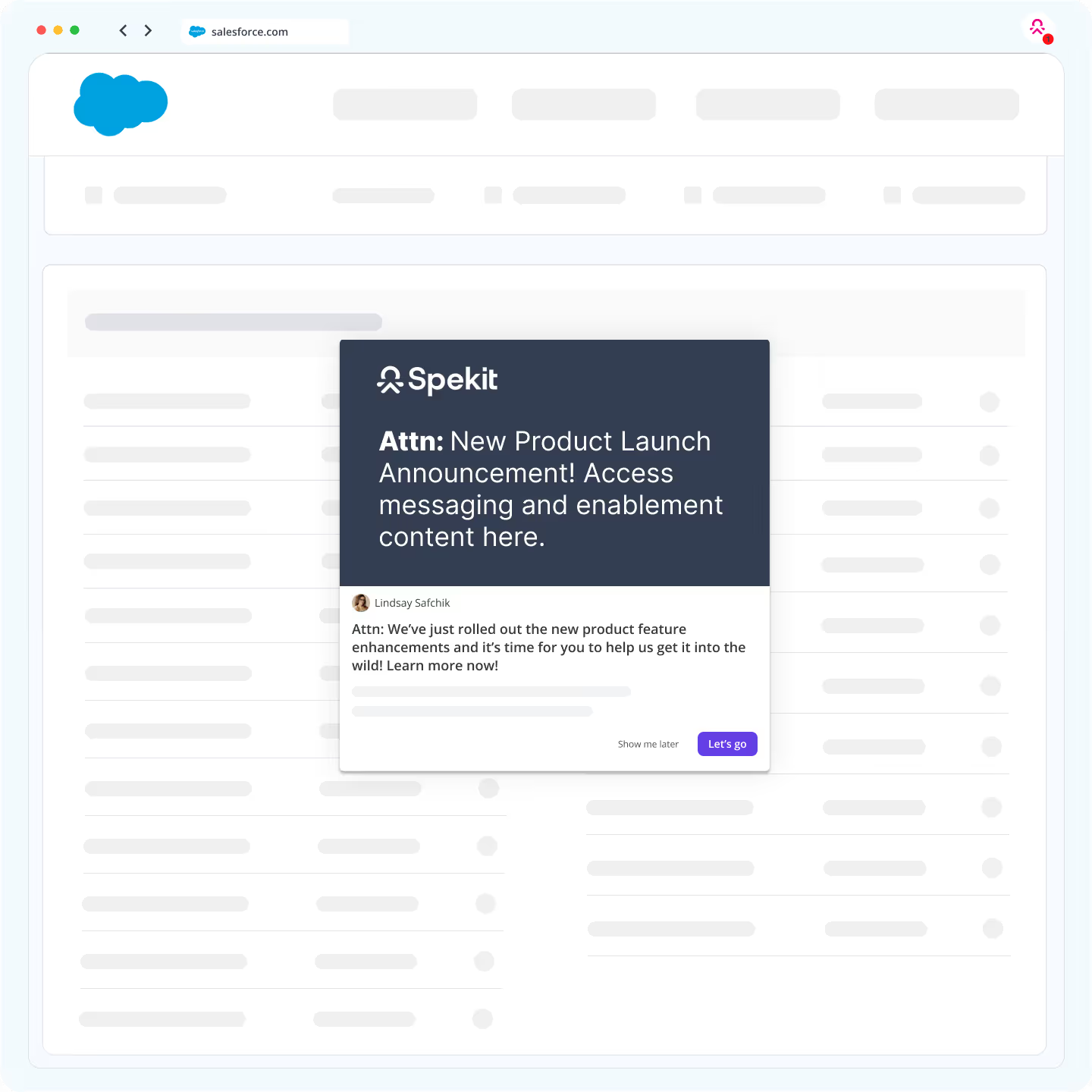
A kickoff message in Slack or a Spotlight in 窪蹋勛圖厙 can go a long way here. Spotlights are in-app alerts that surface important updates right inside tools like Salesforce���perfect for high-visibility announcements like ���New product now live!��� or ���Updated battlecard available.���
Then, go external. Publish your marketing campaigns. Trigger your emails, update your website, push your social posts. This part should feel more like execution than experimentation. If you���ve done Phases 1 and 2 right, you���re not scrambling to write copy the night before.泭
If it���s a big product launch, you might start this phase a little earlier, releasing comms that tease the development to your market and priming your user base for adoption.泭
This is also when Sales starts talking about the new product in real conversations. Check in regularly to find out:
- Are reps using the new assets?
- Do they feel confident with the new messaging?
- What questions are still coming up?
Do it right: Be loud, be clear, be available��地nd repeat yourself ad nauseum.泭
German psychologist Hermann Ebbinghaus proved back in the 19th century that without reinforcement, . That means even the best-crafted messaging can vanish by the time your reps pick up the phone.
Thankfully, we have 21st-century tools like 窪蹋勛圖厙 to make reinforcement automatic���through in-app reminders, just-in-time learning, and embedded training that sticks.
Don���t miss this resource: How to Improve Sales Rep Performance (9 Strategies for 2025)泭
Phase 4: Measure & learn (1-3 weeks post-launch)
Your product���s live. Your messaging is out in the wild. Now it���s time to see if it���s actually working. You want to know:
- Are Sales and CS using the new materials?
- Are they telling the story the way you intended?
- Are customers responding the way you hoped?
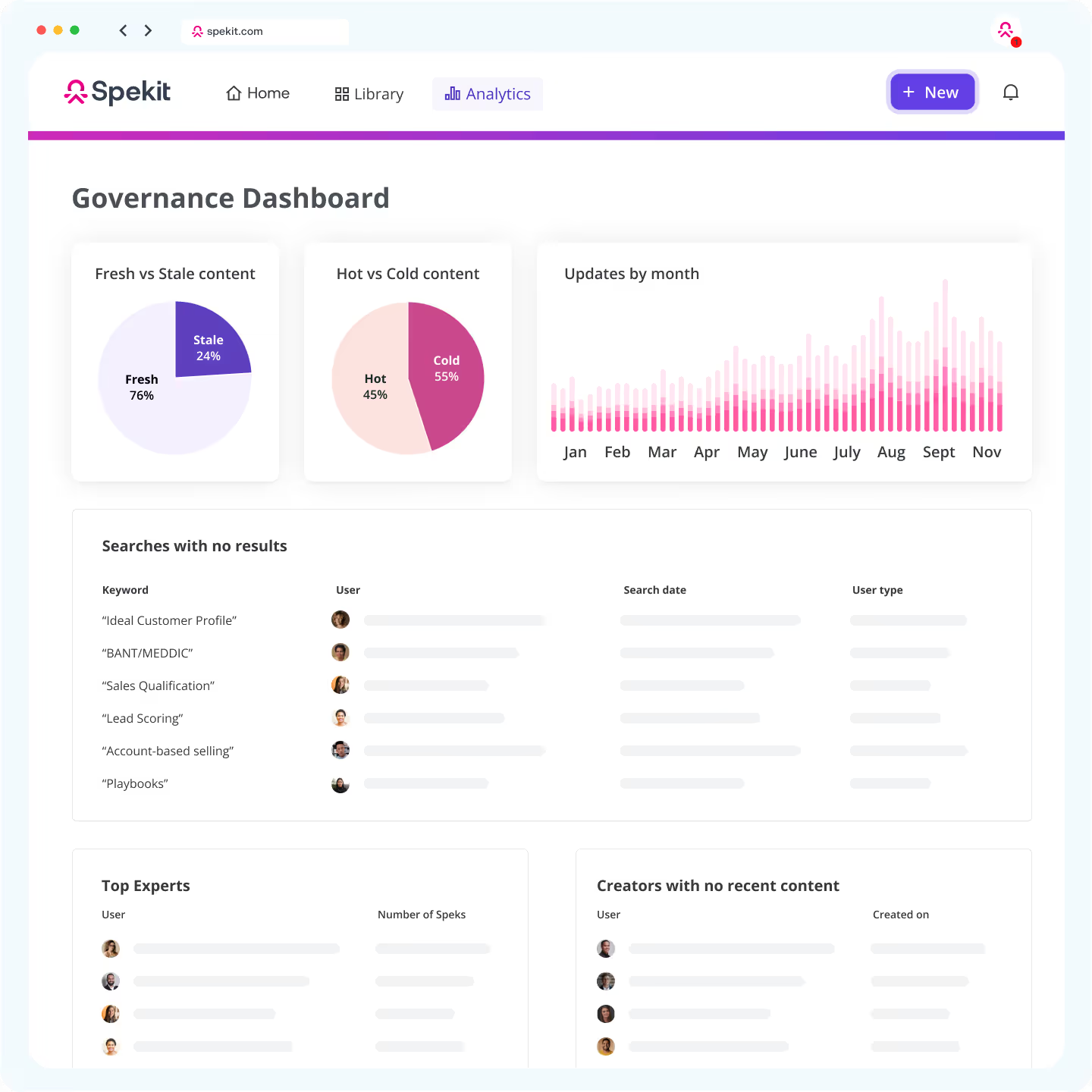
Use tools like 窪蹋勛圖厙 to track content engagement. See which Speks are being viewed, what���s going untouched, and where you might need to follow up. If certain assets aren���t getting used, it could mean they���re hard to find, not relevant enough, or simply need reinforcement.
Next, collect feedback from your internal teams. What landed? What didn���t? Use quick surveys, shadow sales calls, or host a retro session to identify friction and opportunities.
Finally, look at performance and match your early metrics to the launch goals you set in phase 1. That might include:
- Feature adoption or usage rates among target users
- Pipeline generated from launch-related campaigns or messaging
- Revenue attributed to the new product or feature
- Lead-to-close velocity improvements post-launch
- Customer retention or expansion impact tied to the release
- Win rates when the new messaging is used vs. not
Do it right: We also asked our PMM about the biggest post-launch pitfalls, and how to avoid them. They flagged content effectiveness as a blind spot:
���It used to be hard to know if reps were even using the materials. Now we use 窪蹋勛圖厙 to track link engagement and see which content actually drives results.���
You can too. 窪蹋勛圖厙���s analytics feature lets you test and track sales team knowledge and asset application.
Get inspired by real customer success: Our Sales Enablement Consultant, Jacki Arnic, partnered with a client navigating a complex merger. Reps were struggling to identify and act on cross-sell opportunities within the newly expanded product suite.
Jacki helped their product marketing team build a just-in-time ramp-up program using 窪蹋勛圖厙.泭
As a result, the client saw a measurable increase in pipeline contribution and direct feedback from reps who felt more confident selling the integrated offering.泭
This showed their product marketing team that the materials were being used and were actually helping turn prospects into paying customers. You can read more about how this came to be here.
The product launch checklist
In the chaos of launch prep, it���s easy for tasks to slip through the cracks. So just like NASA, you get your very own launch checklist.泭
Download this template here
Download our AI���Powered Product Launch Planning Template and make it your own.
Download the Template
We���ve taken our phase-by-phase plan and turned it into a checklist you can follow (just copy and paste it into your own Notion page, Google doc, or document software of choice).
How to know if you���re launch-ready: A quick launch readiness assessment
Use this 7-question gut check to find out if you���re ready to launch.泭
Ask yourself:
- Have we clearly defined the goals of this launch (and are they measurable)?
- Do Sales and CS know what���s launching, why it matters, and who it���s for?
- Are enablement materials (like battle cards and talk tracks) complete and accessible?
- Has someone reviewed the messaging across internal and external channels for consistency?
- Do reps know where to find assets���and are those assets embedded in their workflow?
- Do we have a plan for reinforcing key messages after launch day?
- Have we aligned on how we���ll measure success post-launch?
What your answers mean:
All Yes: You're ready to launch with confidence. Just keep an eye on post-launch reinforcement and adoption.
���漍��Even One No?: Don���t skip past it. One gap now could snowball into misaligned messaging, missed revenue, or rep confusion. Slow down and revisit that area before moving forward.
If you answered ���no��� to questions 3, 5, or 6���窪蹋勛圖厙 can help you get launch ready in no time. It embeds messaging, FAQs, and enablement content directly into the tools your reps use every day (like Salesforce and Slack), then reinforces it with Spotlights and Speks.
窪蹋勛圖厙: The go-to tool for your go-to-market product launch
Your product launch plan is layered and cross-functional which leaves ample room for misalignment between teams and missed opportunities when selling what���s been launched.
Product marketers at 窪蹋勛圖厙 and in our client companies rely on 窪蹋勛圖厙 to execute their launch plan successfully. Because with 窪蹋勛圖厙, you can:
- Surface messaging where reps work: Embed battlecards, talk tracks, and training into Salesforce, Slack, and more.
- Reinforce launches automatically: Use Spotlights to deliver timely in-app updates that reps can���t miss.
- Track what���s working (and what���s not): Get visibility into content usage so you can refine and scale smarter.
- Move faster with 窪蹋勛圖厙 AI: Turn docs into bite-sized content, auto-generate objection handling, and keep messaging fresh.
When launch day arrives, don���t leave success to chance. With 窪蹋勛圖厙, you���ll know your reps are aligned, your message is landing, and your product is gaining traction from day one.
Book a demo to see 窪蹋勛圖厙 in action and launch with confidence.
If you���re still evaluating your options, this list of the best sales enablement tools can help you compare platforms and find the right fit for your launch needs.
Don���t forget your free copy of the product launch planning template:
Ready to put your plan into action? Our AI���Powered Product Launch Planning Template gives you a pre-built framework to organize timelines, align teams, and make success feel inevitable.
It���s built for busy PMMs and completely customizable to your team���s workflow.
What's inside:
- Launch Strategy & Planning Hub: Build your brief, define your audience, and let AI suggest KPIs, value props, and positioning.
- ���GTM Timeline + Risk Tracker: Auto-generated schedules with built-in risk mitigation planning.
- ���Content Calendar & Messaging Framework: AI-assisted prompts to generate your taglines, press releases, demo scripts, and social posts.
- ���Performance Dashboard: Track metrics that matter and let AI surface insights on what���s working.
- ���Stakeholder & Training Hub: Keep sales, support, and leadership in the loop automatically.
- ���AI Prompt Library: Tap into curated prompts for campaign planning, enablement, performance analysis, and more.