
窪蹋勛圖厙

How Uberall replaced their underused legacy enablement platform, Seismic, with in-workflow enablement that reps actually used

# of Employees
400
Industry
Technology
Website

The problem

Key takeaways

Uberall was paying for a legacy enablement platform that reps barely used

Seismic was so painful to navigate and disconnected from the seller's workflows that most reps avoided using it altogether.

The old stack created workflow friction that cost selling time

Reps who tried to use Seismic were hit with constant friction. Precious time was wasted sifting through portals, pinging Slack channels to ask where things lived, and switching between tools instead of working on deals.

窪蹋勛圖厙 delivered enablement directly into the rep's workflow

Instead of asking reps to go find content, 窪蹋勛圖厙 brought answers, guidance, and coaching to them inside Salesforce, Gong, and other customer management tools. The platform became the default because it reduced workflow friction, not added to it.

Content governance became an automated system

窪蹋勛圖厙's analytics gave the enablement team visibility into what content was being used, what was stale, and where gaps existed. Ownership spread beyond the enablement team to content owners across departments.

AI Sidekick gained traction through real-world workflows

Uberall tied Sidekick to the RFP process, so reps used the agentic coach as part of daily work rather than as a separate initiative.

The problem

A distributed GTM team with a familiar problem

Uberall is a multi-location marketing platform that helps businesses manage their digital presence and drive revenue from every customer interaction. With hundreds of employees spread across different locations, their ability to effectively onboard, ramp up, and enable their go-to-market efforts is fundamental to growth.

Before coming to 窪蹋勛圖厙, their enablement stack looked fine on paper. They had Seismic to handle sales content and an LMS for course-based training.

But the day-to-day experience for both reps and admins was tedious, time-consuming, and disconnected, and adoption of the tools reflected that. When reps had a question or needed to access content, they had to stop what they were doing in Salesforce or Gong, open another platform, and navigate a portal for what they needed.

As a busy rep juggling dozens of priorities, every minute spent hunting for the right answers is precious time thats taken away from strategic selling.

When enablement lives outside reps' workflows, they work around it rather than through it. And that cost shows up in quota attainment, pipeline creation, and closed revenue. Reps lose time, follow-ups are delayed, and buyer questions take longer to answer.

Because Uberalls old enablement platform lived outside of selling moments, regular usage never became a habit for reps.

Daniel Kennedy, Uberall's VP of RevOps, described Seismic as "a very expensive version of Google Drive." The CFO had already negotiated the contract down 60% at the prior renewal and still didn't see the return.

The admin side added to the friction. Updating and organizing content in Seismic required significant effort. For a business operating in todays world of constant change and evolution, the ability to adapt and execute with speed is the single greatest determinant of success.

"We knew we needed to reduce our tools so people dont have to jump between different systems all the time. Our reps live in Salesforce and Gong, so its critical that our enablement lives there too, said , the Field Enablement Lead at Uberall.

The hunt-and-spam cycle was constant. Reps pinged Slack channels asking where content lived, and burned time hunting through tools instead of working deals. Because of this, the enablement team wasted time fielding the same questions on repeat.

Before investing in another platform, the team needed to answer two foundational questions:
1

Can we bring answers, coaching, and content directly into the tools reps already use?

2

Can we find a platform that keeps pace with the speed of the business?

The solution

The solution

窪蹋勛圖厙 seamlessly integrated with the way reps already work

Uberall needed enablement that met reps where they were in the flow of work.

Daniel had used 窪蹋勛圖厙 at a previous company for change management and sales process enablement. When 窪蹋勛圖厙 added CMS capabilities that could cover Seismic's core use case, in addition to enabling the flow of work, he was ready to get backing from their CFO, who knew the old stack wasnt earning its keep.

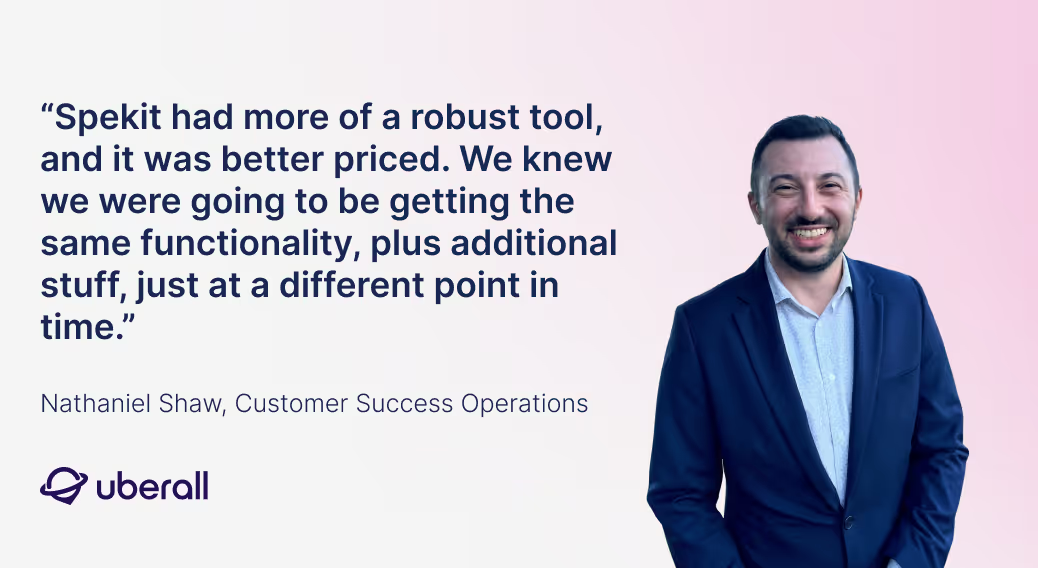
"窪蹋勛圖厙 had more of a robust tool, and it was better priced. We knew we were going to be getting the same functionality, plus additional stuff, just at a different point in time," said , Uberalls Customer Success Operations Analyst.

The rollout took work. The behavior changed.

The move wasnt instant. Natali, Nathaniel, and , Uberall's Instructional Design and Content Development Manager, spent time cleaning out old content, deciding what to keep, restructuring, and setting visibility by team.

That work changed the daily experience for reps. Within months, reps stopped asking "where's this?" in Slack. They stopped hunting through tools and repositories. 窪蹋勛圖厙 became the default for real-time guidance, with content proactively surfaced at critical moments in the sales cycle.

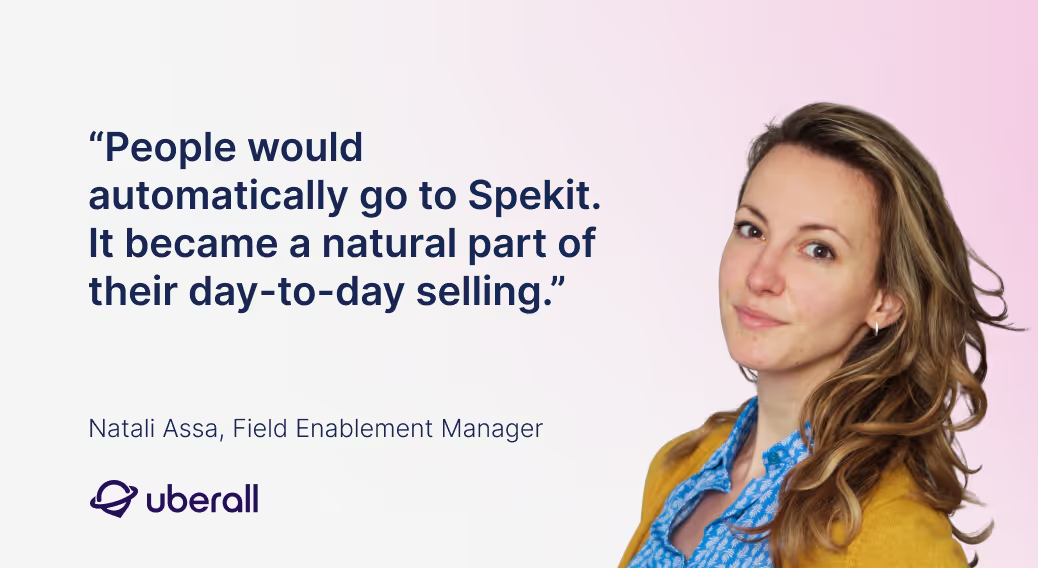
"People would automatically go to 窪蹋勛圖厙. It became a natural part of their day-to-day selling, said Natali.

That behavioral shift shows up in daily execution. When enablement meets reps in the work they're already doing, it stops being a separate destination and becomes how the job gets done.

The results

The results

窪蹋勛圖厙 became the default

A few months in, Uberall had a new default.

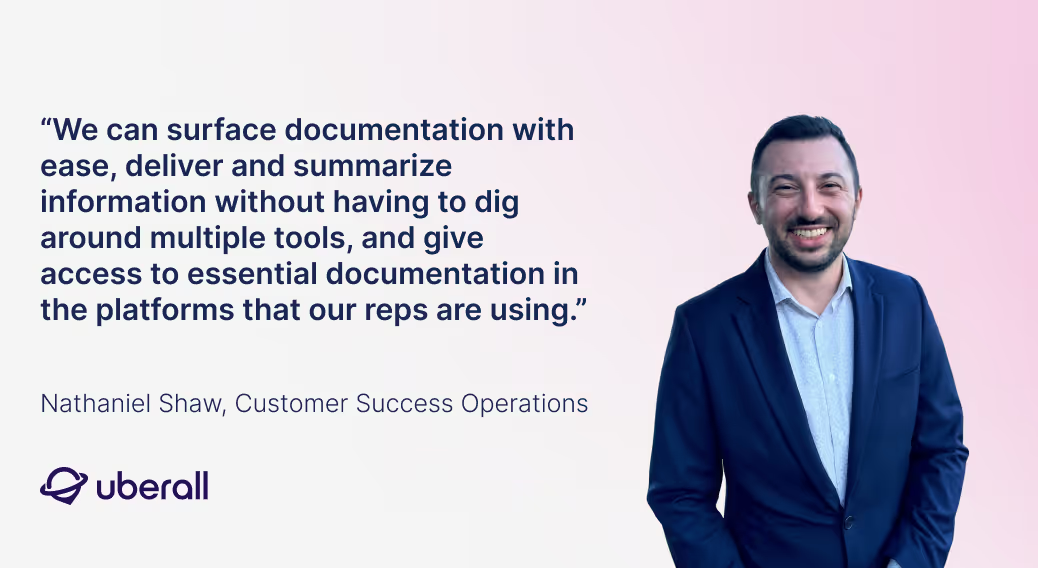
"We can surface documentation with ease, deliver and summarize information without having to dig around multiple tools, and give access to essential documentation in the platforms that our reps are using, said Nathaniel.

Natali added, "For me, one of the highlights is this quick access and the ability to find information across all the chaos of documentation."

The GTM Brain turned governance from guesswork into a system

窪蹋勛圖厙's content analytics gave the enablement team visibility they'd never had before. They could see which content was being used, which was collecting dust, and which was outdated enough to mislead a rep on a live deal. That visibility turned content management from a periodic cleanup into a governed system with real data behind every decision.

Theres a ton of insights within the analytics that we as admins can really use in order to have a better rep experience, said Natali.

The effect spread beyond the enablement team. As they shared analytics with content owners across departments, those owners began taking active responsibility for keeping their materials up to date.

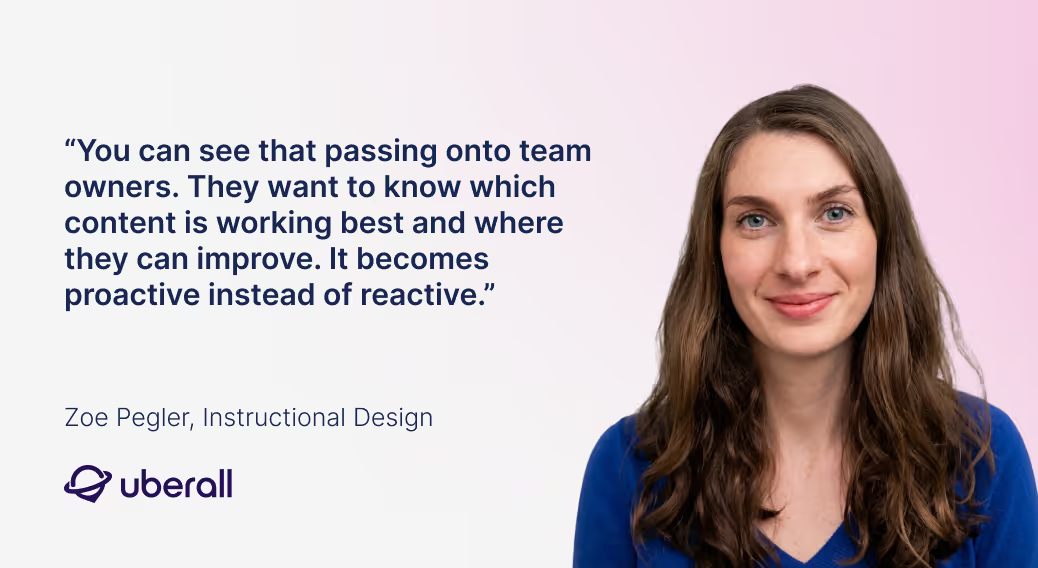
"You can see that passing onto team owners. They want to know which content is working best and where they can improve. It becomes proactive instead of reactive," said Zoe.

This is what scalable GTM readiness looks like in practice. A team of three enablement members wouldnt be able to manually govern every piece of content, but with 窪蹋勛圖厙s AI-powered governance, content creation, and real-time analytics, they can.

窪蹋勛圖厙 AI Sidekick gained traction as an agentic coach inside the RFP process

Uberall took a focused approach to introducing 窪蹋勛圖厙 AI Sidekick to their team. Instead of a broad rollout, the team built an RFP Hub and repository in 窪蹋勛圖厙 and trained reps to use Sidekick as the agentic coach for that process wherever they were completing it. Usage grew organically because the AI was tied to work people were already doing.

"What helps when it comes to adoption of the AI Sidekick is when we integrate it within a new process or a process that we have just revamped, said Natali.

Nathaniel described his own usage pattern: "I use Sidekick sometimes just to see what comes up. It's been useful to be able to get documentation easily without having to manually look through everything."

This is the Rep Acceleration model at work. The AI meets reps in the moment, grounded in curated GTM knowledge, and answers come through doing the job rather than leaving it.

窪蹋勛圖厙's pace of innovation became a competitive advantage

Uberall pointed to one differentiator that doesnt show up on a feature grid: 窪蹋勛圖厙 ships against customer feedback, and does it fast.

The team has a shared Slack channel with 窪蹋勛圖厙's customer success team, direct access to product leadership, including 窪蹋勛圖厙's CEO, and biweekly syncs to stay aligned.

"Pretty much all of our asks have been implemented already. The biweekly syncs are awesome, and the Slack channel's really great, too, said Nathaniel Shaw.

"Youre literally a Slack away. Many times, what we've heard is, 'Don't worry, that's actually in our agenda for next quarter. You literally read our minds, said Natali.

For a team that left a platform that couldn't keep pace with the business, 窪蹋勛圖厙's innovation velocity became a key differentiator that continues to evolve as the way businesses sell and scale evolves.

What's next

Uberall is expanding 窪蹋勛圖厙 across the organization. The team plans to move new-hire onboarding into 窪蹋勛圖厙's upcoming Learning Paths feature, deepen the Gong integration for deal-level content generation, and run a company-wide rep survey to measure the impact of AI Sidekick and Deal Rooms.

Across the industry, traditional enablement platforms, built for a different era of change velocity, . Uberall chose to switch to 窪蹋勛圖厙 because it was designed for the modern selling era, where success depends upon efficiency, automation, and accuracy.

Your path to the 10x rep

See how 窪蹋勛圖厙 increases revenue per rep through faster ramp, more capacity, faster change adoption, and buyer experiences that move deals.