

Get ready to create a repeatable sales process template. This guide walks through how to create the ultimate sales process template that will boost prospecting, qualification, and forecasting so you can arm your salespeople with the knowledge they need to close deals faster.
Prepare to take the uncertainty out of prospecting and lead qualification, create performance and conversion rate expectations, and get your sales team aligned.
What is a sales process? A repeatable path from first touch to expansion
A sales process defines how your team prospects, , runs discovery, handles objections, closes, and expands. It's both a coaching tool for managers and an on-ramp for new hires. The gap between ���documented��� and ���adopted,��� however, comes down to delivery. If guidance lives in portals or long PDFs, it decays and gets ignored. Just-in-time enablement fixes that by surfacing the right step, answer, or asset inside the tools reps use.
Why this matters now
- has gotten tougher.
- don't expect to meet their quota this year, and 84% missed it last year.
- There's a growing gap between speed and execution.
- Content decay is real. Nearly half of enablement leaders say at least 41 percent of their content needs a refresh.
- Low platform adoption and poor UX drive teams to switch vendors.
- Reps share only a fraction of customer-facing content with buyers when discovery is hard.

Do you have a well-documented sales process? Or, do you have that one sales rep who brags about ���just winging it��� or ���going with the flow?��� Chances are their performance is not consistent. They might get lucky, but that free-flowing ���process��� isn���t exactly reliable. Worse, that rep���s attitude infects your sales team, and you end up with a company that can���t meet its targets.
There are many approaches and methodologies for creating and communicating a sales process. The first step is identifying what you want to achieve.
Why build a sales process?
A sales process sets your team up for success. It translates into deeper accountability, better forecasting, and increased revenue.
And with , the need for a sales process has never been greater. Why? Because it gives your salespeople the information they need to excel at their jobs. A sales process also helps them create a consistent experience for your prospects. In short, a sales process template lets sales reps know exactly what to do at any given point in the funnel, whether new or experienced.
don���t review and update their sales processes, meaning their teams are not operating at their peak performance level. More often than not, sales managers know it���s a good idea to have a repeatable sales process but don���t know where to start.
At 窪蹋勛圖厙, we empower sales reps by . More on that later, but first, we���ll cover sales process steps. Then, we���ll share our sales process and how we use it to improve our sales team���s performance.
PRO TIP: Access the free prospect-centered .
Sales process template steps
1. Prospecting
2. Lead qualification
3. Connecting
4. Identify pain points
5. Conduct a demo or free trial
6. Handling objections and questions
7. Make an offer
8. Close the deal
9. Deliver the product
10. Cross-sell/upsell
Every company will have a slightly different sales process because of its capabilities, target market, and culture. Before going further, here are some awesome resources to help you get started:
- If you���re looking for a sales process pdf, from HubSpot and Aircall. You can also find more resources on the HubSpot sales process .
- If you want a detailed step-by-step tutorial, watch our CEO, Melanie Fellay���s ������ webinar. In the first part of this two-part series, she���ll walk you through account planning, prospecting, pipeline management, quoting, and proposals.
- In the second ������ webinar, you���ll dive into account management, performance scores, and support.
Here���s a sneak peek of the end-to-end 窪蹋勛圖厙 sales process:
1. Prospecting and lead generation
Prospecting is the stage in the sales process where your marketing or sales team actively seeks out potential leads. The goal is to create a pipeline of potential customers your team can engage with and convert into customers. Prospecting comes in different forms. You can prospect on social media and create lead-generation campaigns. You can skip this step if your sales process relies on getting leads from third-party sources (like referrals or vendor buying lists).
Prospecting is a key step in the sales process, and SEO can be a powerful tool in helping your team find potential leads. By optimizing your website for search engine rankings, you can increase visibility and drive more organic traffic to your website. Doing this will generate more leads and increase the size of your lead pipeline. By optimizing content for search engine rankings, you can ensure the right people see your website and help your team connect with the right prospects.
Related activities include:
- Searching LinkedIn
- Attending trade shows
- Attending networking events
- Email outreach
- Cold outbound lead generation
2. Lead qualification
Not all prospects are created equal. Some have the potential to be fantastic clients. Others may turn out to be bad-fit customers and should be avoided. It���s not just a matter of whether or not the prospect can afford it ��� it���s about whether their needs match your product���s capabilities. Compare the prospect to any Ideal Customer Profiles (ICP) that you���ve created in advance. If your leads are being pre-qualified by another team, mention that in your sales process documentation to clarify the responsibilities.
Additionally, you should have a lead qualification system in place to track and monitor the progress of each lead throughout the sales process. Having an organized sales process template can help with this.
Related activities include:
- Research the prospect online and on social media
- Conduct a discovery call
3. Connect
This will be your first ���real��� contact with the prospect once they���ve passed the qualifying stage. It can happen over multiple channels, like phone calls, email, social media, or in person. In some companies, the BDR/SDR hands the prospect to the sales rep. If there has been no prior contact with the prospect, your sales rep may need to take a more proactive approach. Remember, getting in touch may take several tries if this first attempt is a cold call.
Related activities include:
- Reach out attempts via different channels
- Defining meeting specifics (location, channel, date/time)
- Identifying and inviting key decision-makers
4. Identify pain points
This is where you dig deeper into a prospect���s situation and identify the areas where they need help. Note that this doesn���t all need to happen during your initial call. You can accomplish this by asking them effective questions to draw the right information out or by conducting surveys and providing questionnaires.
Related activities include:
- Preparing questions in advance based on your prospect research
- Interviewing decision-makers
- Interviewing important stakeholders
- Sending surveys and/or questionnaires

5. Conduct a demo or free trial
Very few people will be willing to purchase a product they haven���t seen, so you���ll probably have to provide a demo or free trial to get the prospect truly interested. Do your best to ensure that important stakeholders like a line manager and/or an end user get to see the demo. Many products executives purchase fall flat because they don���t get feedback from the people who will be using them.
Related activities include:
- Building a trial environment to match a prospect���s use case
- Scheduling free trial start and end dates if applicable
- Defining a list of users allowed to access a free trial
- Customizing demo script to match prospect needs
6. Handling objections and questions
Your prospect will likely have questions and/or objections after the demo (you should be worried if they don���t). Some of them will be simple and easily addressed using your team���s stock knowledge of the product, while others may require the assistance of a sales engineer or someone from the product team. When handling objections, your sales reps need to be honest. Don���t let them fall into the trap of saying what the prospect wants to hear just to make a sale.
The truth will come out when the prospect finally uses the product. Many sales organizations have a policy of clawing back sales compensation if a customer churns soon after buying.
Related activities include:
- Consulting with Customer Success or Engineering
- Having a follow-up call with a sales engineer
- Adjust the trial environment to address objections
7. Make an offer
Once all objections have been handled to the prospect���s satisfaction, it���s time to draft and issue a formal proposal. This proposal will include as many details as possible about the transaction, from what they���re paying to what they���re getting. Be sure to add details like the purchase amount, applicable discounts, and number of licenses purchased. You should also include the payment terms, expected support level, and renewal period. The prospect may negotiate the terms, in which case you will make adjustments until both parties are satisfied.
Related activities include:
- Draw up a formal proposal document
- Arrange meetings to discuss terms
- Document any questions and concerns
8. Close the deal
The deal can be closed when your sales rep and prospect agree on final terms and conditions. This is where contracts are drawn up and signed and POs issued. Depending on the situation, your team may have to do some last-minute encouragement to get a customer to close sooner if you���re trying to catch a quota period. Such encouragement includes offering incentives like a free month of service, discounts, or perhaps creating a sense of urgency.
Related activities include:
- Get approvals from the prospect
- Secure purchase order
- Determine payment method and timeline
- Clear contracts with legal
9. Deliver the product
The sale doesn���t end when the purchase is made. Many deals fail after the contract is signed. Don���t let your sales team relax until after fulfillment has been completed to everyone���s satisfaction. This could range from delivering a physical product to accessing an online platform or software product.
Related activities include:
- Scheduling delivery of the physical product (if applicable)
- Handoff to customer success or implementations
- Check-in calls to gauge levels of satisfaction
10. Cross-sell/upsell
It���s worth following up with the customer after they���ve beenusing the product for a while to see if there���s an opportunity to expand their product usage, whether by adding additional licenses or offering related products or services. Different organizations tackle this in different ways. Some would prefer that the customer success team handle this, while others have dedicated account management teams to expand existing customers.
Related activities include:
- Conducting a QBR to assess the needs
- Coordinating upsell campaign with customer success
- Reaching out to your product team for new features
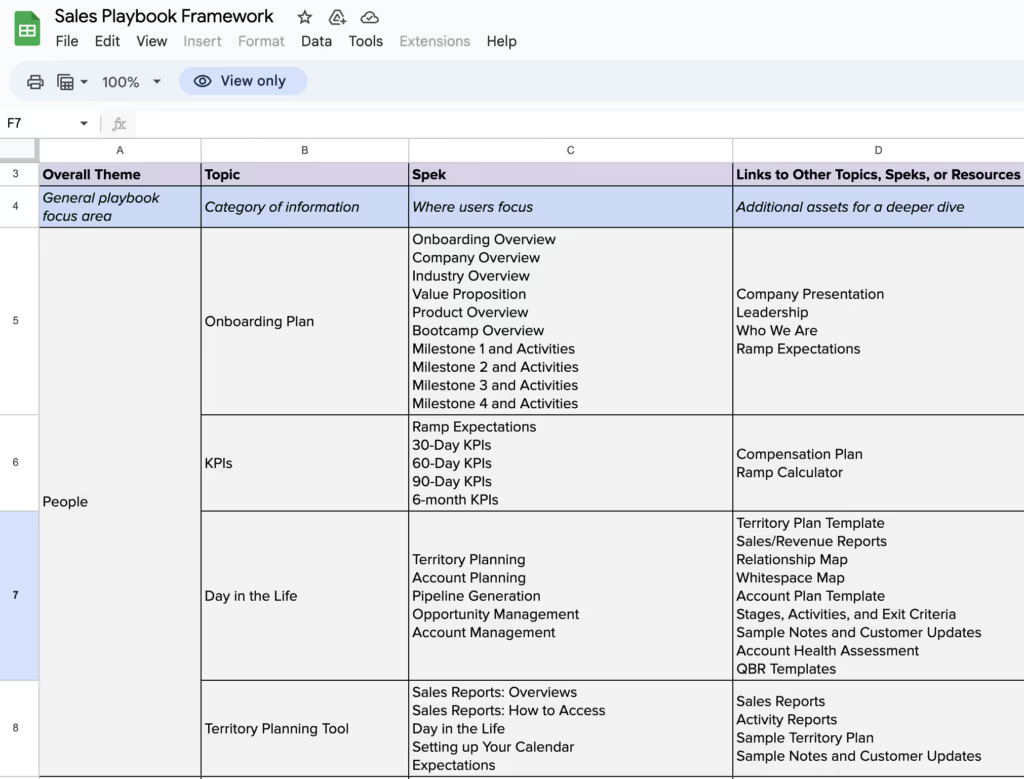
Hint hint ��� we partnered with the team at Skaled to create this incredible Sales Playbook framework in Google Sheets. You can download it for !
Build your sales process template in 窪蹋勛圖厙 in hours, not months
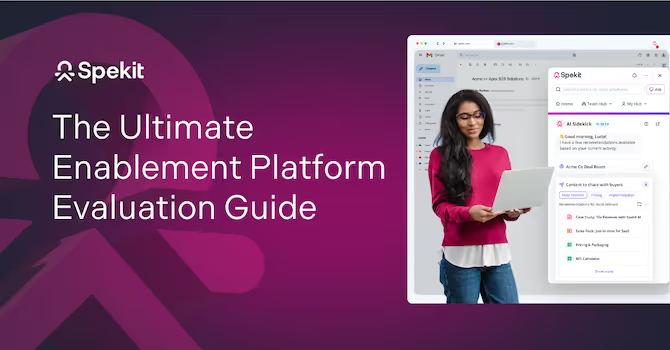
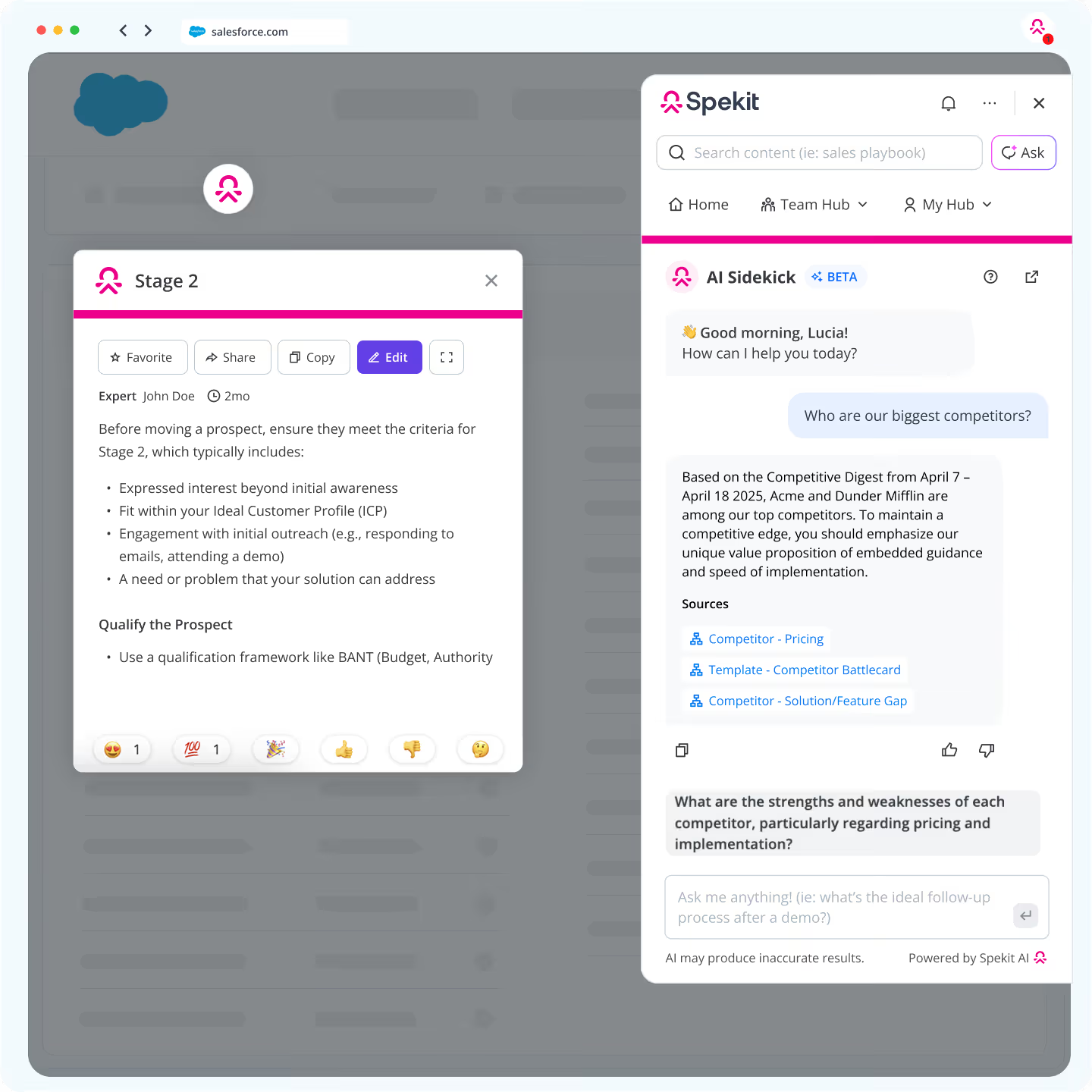
窪蹋勛圖厙 unifies sales content and learning, delivered in the flow of work with 窪蹋勛圖厙 AI��AI Sidekick, your contextual Just-in-Time Sales Assistant. It combines the best of DAP, KMS, CMS, and LMS capabilities without the bloat or brittle integrations.
What your reps experience every day
- Sidekick Assistant: Ask, ���How do I discount for enterprise?��� or ���Send me the manufacturing case study.��� Get an answer, insert it into Gmail, or add it to a Deal Room in one click.
- Proactive recommendations: When a rep opens an Opportunity, Sidekick suggests the play, proof, and next step based on stage, emails, and call notes in Gong or Chorus.
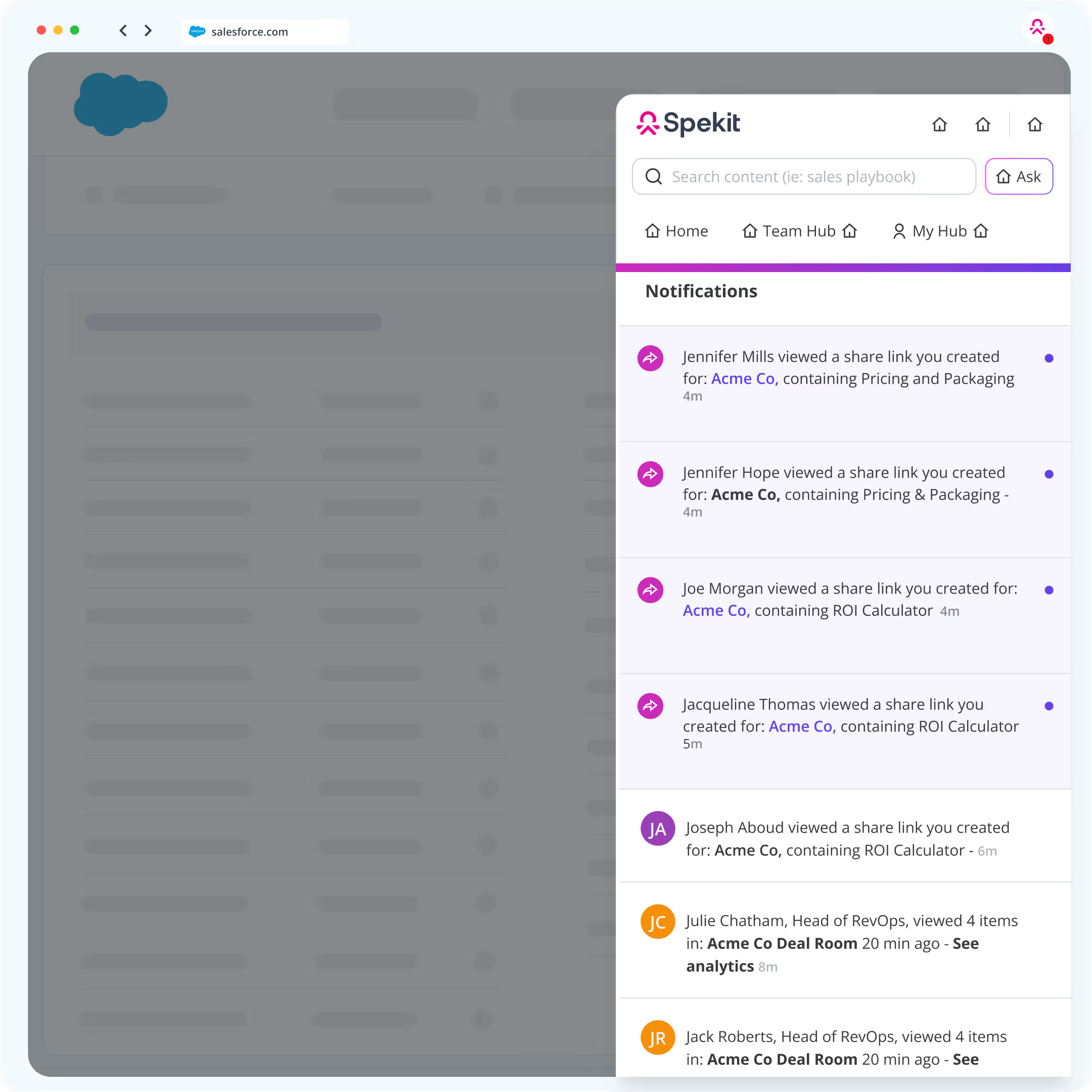
- Deal Rooms: Create a buyer hub from Sidekick to share the exec summary, mutual plan, and assets, then get alerts when stakeholders engage.
- Real-time change alerts: Push process, pricing, or product updates directly into Salesforce, Gmail, or Slack so the new path is visible at the moment of need.
What enablement and marketing get
- Fast setup: Minimal IT. AI-assisted content creation. Day-one impact.
- Governance that kills decay: Modular content, verification, and smart refresh cues so sellers trust what they see.
- Unified analytics: See what gets used, where, and by whom. Tie buyer engagement to pipeline movement.
From static playbooks to modular, just-in-time guidance
Replace long-form PDFs with modular blocks and playlists: discovery prompts, industry value bullets, battle cards, email snippets, pricing notes, proof points. Reuse those blocks in onboarding, in-app help, and Deal Rooms. One edit cascades everywhere so content stays accurate.
Why this approach wins
- Reps search less and sell more when answers show up in-context.
- Admins maintain once and publish everywhere.
- Leadership sees which plays and assets correlate with wins.

Rapid adjustments to your sales process template
can be easily adjusted as your strategy evolves. You don���t have to wait months to make changes that you know will drive growth. Instead, you can publish and communicate playbook updates in minutes. 窪蹋勛圖厙 also allows you to gauge the effectiveness of your sales process, determine who is using your resources, and identify areas of improvement.
Pipeline building with in-app persona guides
Help reps build more pipelines faster with in-app persona guides. Since prospecting happens in real-time, your playbooks should too. Reveal competitive battle cards, objection handling tips, and more in the moment of need.
Streamlined planning and account building
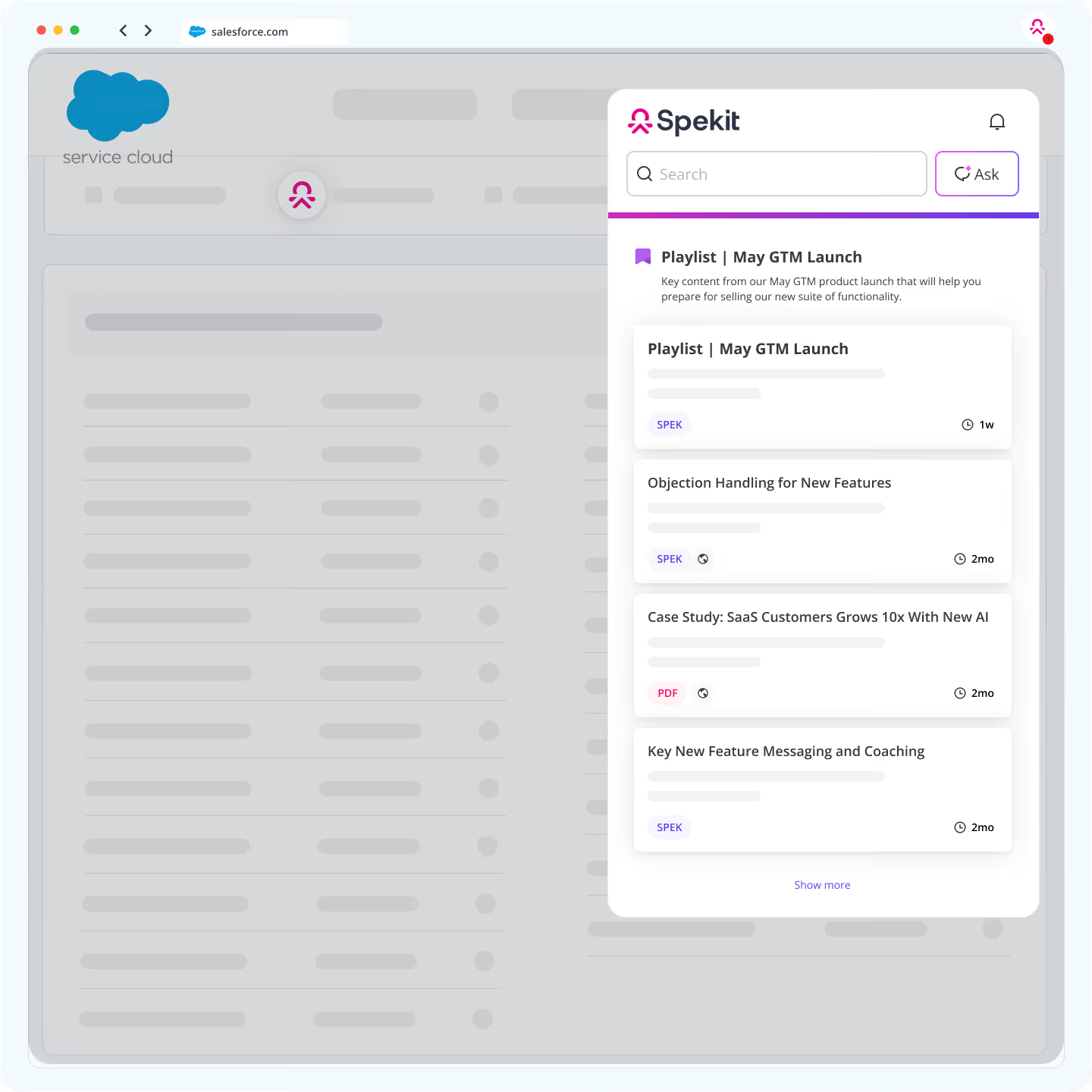
窪蹋勛圖厙 delivers in-app sales plays for high-value accounts, target industries, personas, and more. No more scrolling through a 100-page Google Doc.
"窪蹋勛圖厙 makes it easy for my salespeople to have the information they need, when they need it, and right where they are.��� ��� ��Jessica Jones, Data Axle. - Read the full case study!
Benefits of using 窪蹋勛圖厙 for your sales process template
Sales reps using 窪蹋勛圖厙 have achieved 20% higher quota attainment, a 70% increased deal save rate, and spent 50% less time communicating new initiatives and changes.
Real-time coaching and support
Help reps push deals through the funnel with real-time coaching and support. Top-performing sales reps are 2x more likely to report they can always find answers to questions independently.
���窪蹋勛圖厙 had been our dream tool for a while. The combination of just-in-time learning with a powerful CMS gave us everything we needed in one place.��� - Jenna Siegal, InMoment. Read the full case study!
Retention and expansion with customer playbooks
Drive retention and expansion with customer playbooks embedded within Clari, Gainsight, or any web app. This gives your Customer Success team the knowledge they need to turn new customers into lifelong champions.
"窪蹋勛圖厙 hasn���t just changed how we work, it���s changed how we think about learning. It���s no longer about waiting for the next training session, it���s about empowering every person, everywhere, to find what they need, when they need it. That���s the future of enablement." - Richart Thibault, Q4. Read the full case study!
Readymade playbooks
If you don���t have time to create playbooks from scratch, 窪蹋勛圖厙 has readymade playbooks. Get the JBarrows Filling the Funnel Playbook, LinkedIn Sales Navigator Prospecting Playbook, or ZoomInfo Best Practices Playbook.
For a step-by-step breakdown of how to build each stage of your sales process in 窪蹋勛圖厙, .
Sales process final thoughts
You need at least one documented sales process if you want your sales team to hit consistently ��� or even exceed ��� quota. But it���s better to cover your bases and have multiple processes for different scenarios. Using our documentation process template to generate these sales processes, you can create a comprehensive set of team guidelines so that your sales reps can be confident and know exactly what to do, no matter their situation.
to digitize your sales process template and drive adoption with the leading just-in-time sales enablement platform.